
Create Your Dream Basement Bar: Design, Tips & Inspiration
If you’re looking to transform unused basement space into a comfortable, stylish gathering spot, a basement bar is one of the best upgrades you can make.
A well-designed bar not only elevates your home’s entertainment value, but it can also increase resale appeal and help you get more enjoyment from your home year-round.
As a professional contractor serving local homeowners, Brown Building Contractors specializes in building basement bars that are functional, durable, and tailored to your lifestyle. Below, we break down key considerations, design tips, and basement bar ideas to help you plan your perfect space.
Wet Bar vs Dry Bar: What’s the Difference?
A common first question is whether to build a basement wet bar or a dry bar.
Wet Bar
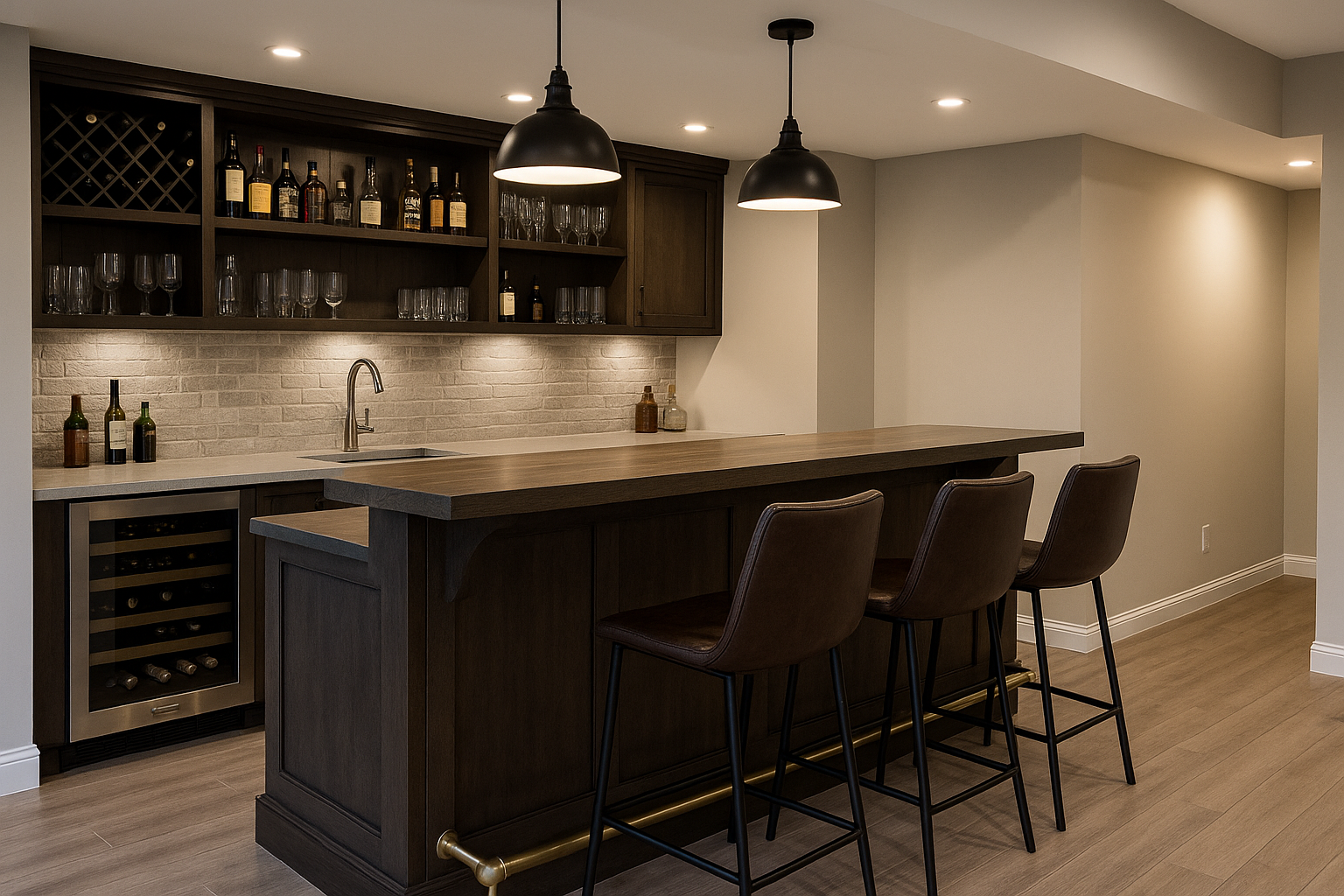
A wet bar includes a working sink with plumbing and drainage. This setup makes drink prep and cleanup easier, especially if you frequently entertain. It’s ideal for homeowners who want a full-service bar experience or who prefer not to bring dishes upstairs.
Dry Bar
A dry bar has no sink, which makes installation simpler and more budget-friendly. It works well in small basement bar layouts, entertainment rooms, or finished basements where plumbing access is limited.
How to Choose
Your decision depends on your budget, plumbing access, and how you’ll use the space. Wet bars offer convenience and higher functionality, while dry bars save on cost and maximize layout flexibility.
Not sure which option is right for your home? Brown Building Contractors can assess your basement and help you determine the best fit.
Planning Your Space & Layout
Every basement is unique, which is why professional planning matters. Here are the most important factors to consider:
Ceiling Height & Egress
Ensuring enough overhead clearance is essential for comfortable seating and cabinetry. Proper egress—especially when converting a basement into a finished living area—is also required for safety and code compliance.
Plumbing & Electrical
Basement bars often include appliances like beverage fridges, ice makers, or wine coolers. Proper outlet placement, dedicated circuits, and plumbing planning are crucial to long-term reliability.
Choosing the Best Basement Bar Layout
- Straight-line layout: great for narrow basements.
- L-shaped bar: offers more prep space and seating.
- U-shaped bar: ideal for entertaining larger groups.
- Walk-behind bar: traditional bartender-style setup.
Key Design Elements
To build a comfortable, functional bar, certain dimensions and features matter.
Bar Counter Heights & Depth
Standard bar height is 42 inches, with a counter overhang of 10–12 inches for comfortable seating. Depth should accommodate appliances or storage behind the bar.
Seating & Spacing
Leave 24–30 inches of width per bar stool. A foot rail can enhance comfort and add a classic pub feel.
Shelving & Storage
Floating shelves, closed cabinetry, wine racks, open shelving and glass storage help organize your bar and showcase personal style.
Lighting & Ambiance
Lighting can make or break a basement bar’s atmosphere.
- Ambient lighting: recessed or flush-mount fixtures for overall brightness.
- Task lighting: under-cabinet or pendant lights over the bar.
- Accent lighting: LED strips, backlit shelves, or display lighting for bottles and glassware.
If you’re looking for basement bar lighting ideas, consider using dimmable fixtures to adjust the ambiance from “game night” to “cocktail hour.”
Materials, Finishes & Style Inspirations
Basements require durable, moisture-resistant materials. Choose sealed countertops, treated wood cabinetry, and flooring designed for below-grade environments. Popular style directions include:
- Modern minimalist: clean lines, neutral colors, concrete flooring.
- Rustic/industrial: reclaimed wood, metal accents.
- Classic pub bar: rich woods, warm lighting, brass details.
Small Basement Bar Ideas
Even compact spaces can become highly functional with smart design.
- Under-stairs bars with slim counters
- Floating shelves paired with a beverage center
- Fold-down or wall-mounted counters
- Dry bar setups to avoid plumbing limitations
Small-space solutions allow you to enjoy a home bar without sacrificing square footage.
Budgeting, Costs & ROI
Your basement bar cost will depend on materials, size, plumbing, electrical, and appliances. A dry bar typically costs less, while a wet bar adds plumbing-related expenses.
Investing in durable finishes, proper waterproofing, and professional installation provides long-term value and lowers maintenance needs. A well-built basement bar is also a smart investment, often increasing buyer appeal and adding usable living space.
FAQ
How long does it take to build a basement bar?
Most projects take 2–6 weeks, depending on complexity and permits.
Do I need permits?
Yes, especially for plumbing, electrical, or structural changes. A licensed contractor handles this for you.
Can I add a bar to an unfinished basement?
Absolutely. Many homeowners build bars as part of their basement finishing plan.
What’s the difference between a wet bar and a kitchenette?
A kitchenette includes cooking appliances; a wet bar is designed primarily for beverages and light prep.
Ready to Build Your Dream Basement Bar?
A beautiful basement bar starts with a solid plan and skilled craftsmanship. As a trusted local contractor, Brown Building Contractors designs and builds custom bars that match your home, budget, and lifestyle.
Contact us today to schedule a consultation and start transforming your basement into the ultimate entertainment space.