
What Is Basement Waterproofing and When Do You Need It?
Basement waterproofing is designed to protect your home from water intrusion, moisture buildup, and long-term foundation damage. While a basement may seem solid and sealed, water can find its way in through cracks, porous materials, and pressure from surrounding soil.
Understanding what basement waterproofing is, why it matters, and when it’s needed can help homeowners prevent costly repairs and protect their living space.
Whether you’re dealing with visible basement leaks or planning ahead to safeguard your home, basement waterproofing plays an important role in maintaining a dry, healthy foundation.
What Is Basement Waterproofing?
Basement waterproofing refers to a range of systems and techniques used to prevent water from entering a basement or to manage water once it does. These solutions address moisture at different points, from sealing foundation walls to redirecting groundwater away from the home.
The goal of basement waterproofing isn’t just to stop leaks; it’s to reduce humidity, protect structural damage, and create a safer, more usable basement space. In many U.S. homes, waterproofing also helps prevent mold growth and foundation deterioration caused by prolonged moisture exposure.
Common Causes of Basement Water Problems
Understanding basement water leakage causes is key to choosing the right solution. Some of the most common include:
- Poor drainage is a major factor. When soil slopes toward the foundation or gutters, and downspouts don’t move water far enough away, moisture collects around the basement walls.
- Foundation cracks and porous materials also allow water seepage inside. Even small cracks can expand over time as water freezes, thaws, and creates pressure.
- Hydrostatic pressure happens when groundwater collects around the foundation and forces moisture through basement walls or floors. This is especially common after heavy rainfall or snowmelt.
- Other causes include leaking basement windows, damaged window wells, and plumbing issues inside the home.
Warning Signs You Need Basement Waterproofing
Some signs of water problems are obvious, while others develop slowly over time. Visible indicators include standing water, damp walls, peeling paint, and white powdery residue known as efflorescence.
Hidden warning signs can be just as important. Musty odors, high humidity, mold or mildew, and warped flooring often point to ongoing moisture issues. If water appears after heavy rain or you’re planning to finish your basement, these are strong signs you need basement waterproofing.
Types of Basement Waterproofing Methods
There are several basement waterproofing methods, each designed to address specific problems.
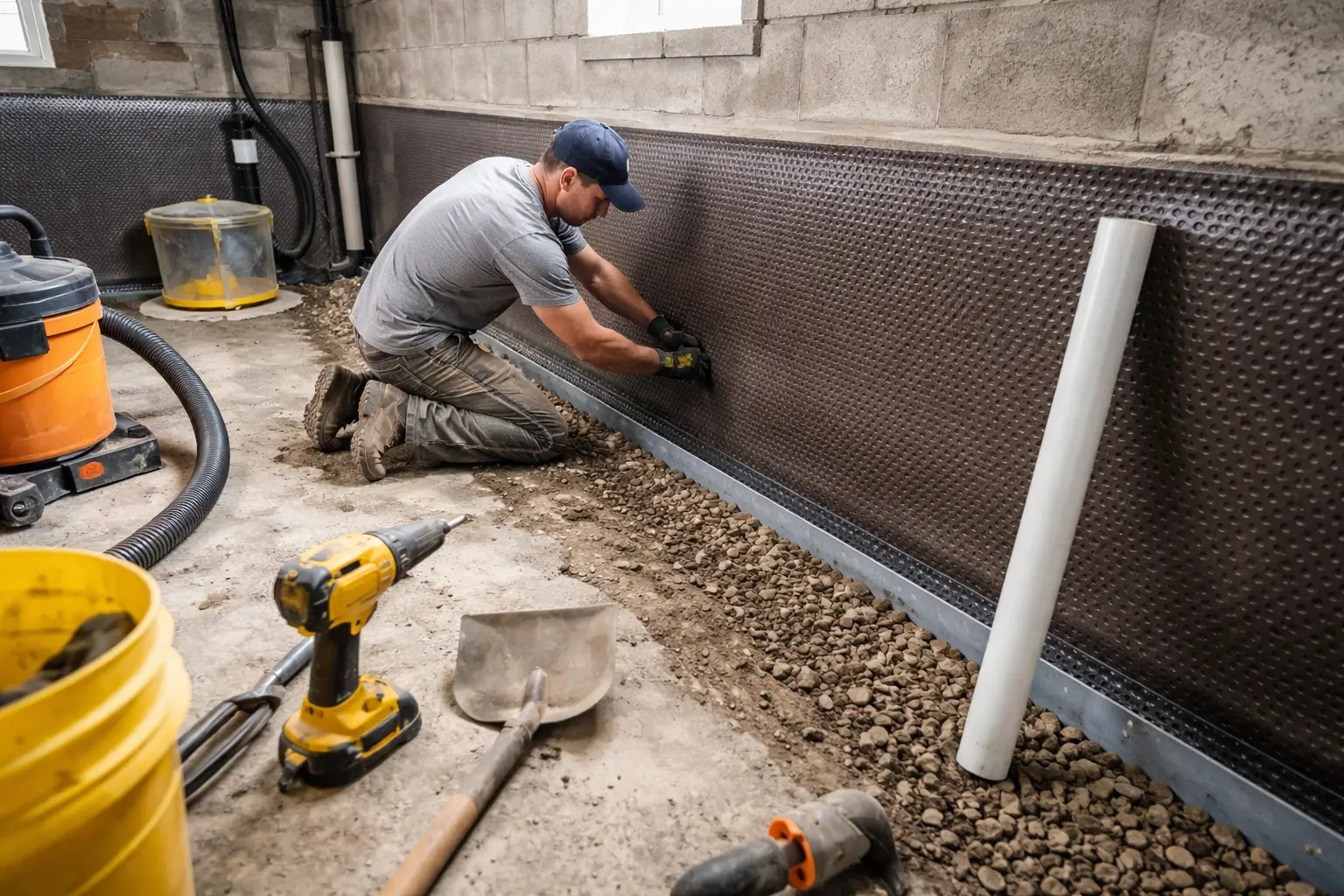
Interior waterproofing focuses on managing water after it enters the basement. Common solutions include interior drainage systems, sump pumps, sealants, and vapor barriers. These options are less disruptive and often more affordable.
Exterior waterproofing addresses water at its source. This involves excavating around the foundation, applying waterproof membranes, sealing cracks, and installing exterior drainage systems like French drains. Exterior solutions tend to offer more comprehensive protection but require more labor.
The best basement waterproofing solutions are tailored to the cause of the water problem, and many homes benefit from a combination of methods.
Interior vs Exterior Basement Waterproofing
When comparing interior vs exterior basement waterproofing, the key difference is where the water is managed. Interior systems control moisture once it reaches the basement, while exterior systems prevent water from entering in the first place.
Interior waterproofing typically costs less and installs faster, making it a practical option for many homeowners. Exterior waterproofing provides long-term protection and is often recommended for severe or recurring water issues.
The right choice depends on your budget, the severity of the problem, and the condition of your foundation.
How Much Does Basement Waterproofing Cost?
Homeowners often ask, how much does basement waterproofing cost? Prices vary widely depending on the method used, basement size, and severity of the issue.
Interior waterproofing solutions generally fall on the lower end, while exterior waterproofing involves higher costs due to excavation and materials. While waterproofing is an investment, it often prevents far more expensive foundation repairs and helps protect property value.
How to Prevent Basement Water Damage and When to Waterproof
Preventive steps include keeping gutters clean, extending downspouts away from the foundation, maintaining proper grading, and sealing minor cracks early. However, when water intrusion becomes recurring, professional waterproofing is often the best solution.
Basement waterproofing is especially important before finishing a basement or during foundation repairs, when long-term protection matters most.
Protect Your Basement Before Water Causes Damage
Basement waterproofing helps protect your home’s foundation, improving indoor air quality, and usable living space. Addressing moisture issues early can save time, money, and stress down the road.
If you’re noticing warning signs or want expert guidance, Brown Building Contractors can assess your basement and recommend reliable, long-lasting waterproofing solutions. Contact our team today to schedule a consultation and take the first step toward a dry, protected basement.
Locations We Serve:
Dupont
Lacey
Olympia
Tumwater
University Place
Steilacoom
Also Read: Basement Lighting Ideas to Brighten Up Dark Spaces