
Bathroom Dimensions: Standard Sizes, Layouts & Space Planning Tips
Bathroom dimensions play a major role in how comfortable and functional a space feels. A well-planned bathroom isn’t just about style; it’s about having the right clearances, fixture spacing, and spacious layout to support daily routines.
Whether you’re remodeling an existing bathroom or planning a new build, understanding standard bathroom dimensions can help you avoid costly mistakes and create a space that feels balanced and easy to use.
This bathroom size guide covers common bathroom layouts, minimum clearance requirements, and practical planning tips for small, standard, and master bathrooms.
Why Bathroom Dimensions Matter
Proper bathroom layout measurements affect everything from safety to long-term comfort. Tight spacing can make a bathroom feel cramped, while poor fixture placement can interfere with doors, storage, and movement.
Following recommended dimensions also helps ensure your bathroom meets local building codes and performs well for years to come.
Because bathrooms are used multiple times every day, even small layout issues can become ongoing frustrations. Getting the dimensions right from the start creates a space that feels natural and efficient.
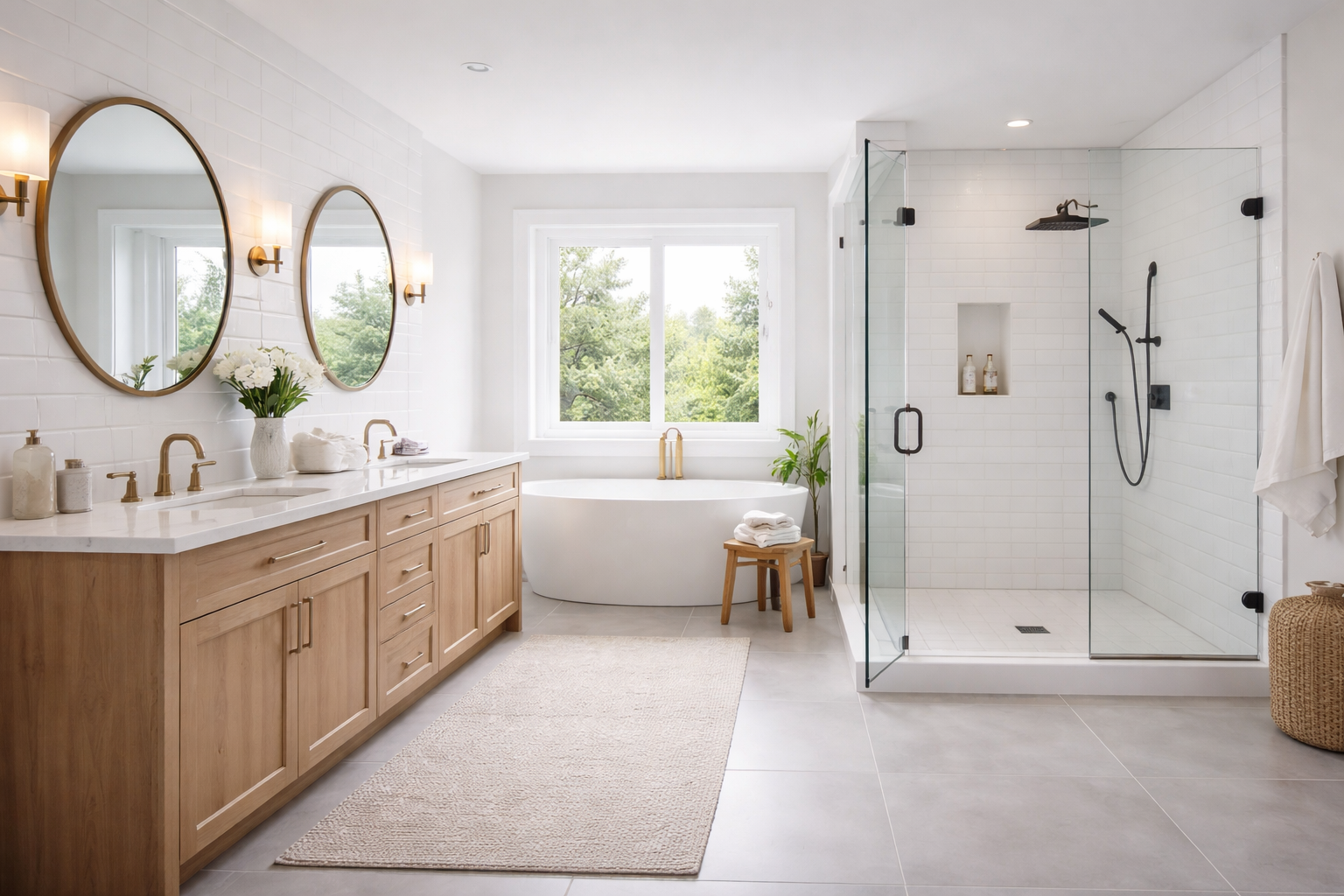
Standard Bathroom Sizes By Type
While there’s flexibility in design, most homes follow general size ranges based on bathroom type.
Small Bathroom Dimensions
Small bathroom dimensions typically range from 35 to 40 square feet. These bathrooms often include a toilet, sink, and either a compact shower or tub-shower combination.
For a minimum bathroom size, careful planning is essential. Wall-mounted vanities, corner sinks, and sliding doors can help maximize usable space without sacrificing comfort.
Standard Full Bathroom Dimensions
Standard bathroom dimensions for a full bath usually fall between 40 and 60 square feet. This allows room for a toilet, vanity, and tub or shower with comfortable clearances.
This size offers more flexibility for bathroom layout measurements, including better storage options and improved circulation around fixtures.
Master Bathroom Size Guidelines
A typical master bathroom size ranges from 75 to 100 square feet or more, depending on features. Larger layouts may include double vanities, separate showers and tubs, or private toilet areas.
Planning zones within a master bathroom helps maintain privacy and keeps the space from feeling cluttered.
Powder Room Dimensions
Powder rooms, often referred to as a half bathroom, are usually the smallest bathrooms in a home, averaging 15 to 25 square feet. While compact, proper toilet clearance dimensions and sink dimensions are still essential to keep the room comfortable.
Minimum Clearance & Fixture Spacing
Clearance requirements ensure safe, functional movement within the bathroom.
Toilet Clearance Dimensions
Most codes require:
- At least 15 inches from the toilet centerline to each side
- 21 inches of clearance in front, with 30 inches recommended for comfort
Vanity Size Guide
Standard vanity sizes range from 24 to 60 inches wide, depending on the bathroom. There should be at least 30 inches of clear floor space in front of the sink to allow easy use.
Bathtub Dimensions
Common bathtub dimensions include:
- 60 inches long x 30 inches wide for alcove tubs
Freestanding tubs and soaking tubs often require additional space around the tub for access and cleaning.
Shower Size Standards
Shower size standards typically start at 36 x 36 inches. Walk-in showers are often larger, especially in master bathrooms, to improve comfort and accessibility.
Common Bathroom Layout Mistakes To Avoid
One of the most frequent issues in bathroom design is ignoring door swing and fixture spacing. Doors that hit vanities or toilets can disrupt the entire layout. Overcrowding fixtures or undersizing storage can also make even large bathrooms feel inefficient.
In small bathroom dimensions, poor planning is especially noticeable. Keeping layouts simple and prioritizing clear pathways helps prevent cramped designs.
Remodel vs New Construction Planning
Bathroom dimensions for remodels are often limited by existing plumbing and wall locations. Creative fixture choices and layout adjustments can still improve function without major structural changes.
New construction offers more flexibility, allowing homeowners to adjust room sizes, relocate plumbing, and design a new floor plan that supports better traffic flow and long-term needs.
Accessibility & Future-Proofing
Wider clearances, curbless showers, and larger turning areas improve accessibility and support aging in place. Even if full accessibility isn’t required now, planning for extra space can make bathrooms more adaptable over time.
Planning Bathroom Dimensions With Confidence
From small bathroom layouts to spacious master bathroom designs, understanding standard dimensions and clearance guidelines helps create bathrooms that feel comfortable and practical.
If you’re planning a bathroom remodel or new construction project, working with experienced professionals ensures your layout meets code requirements while fitting your lifestyle. Brown Building Contractors helps homeowners design bathrooms that balance comfort, function, and long-term value.
Contact Brown Building Contractors today to start planning a bathroom that feels right, down to the last inch.